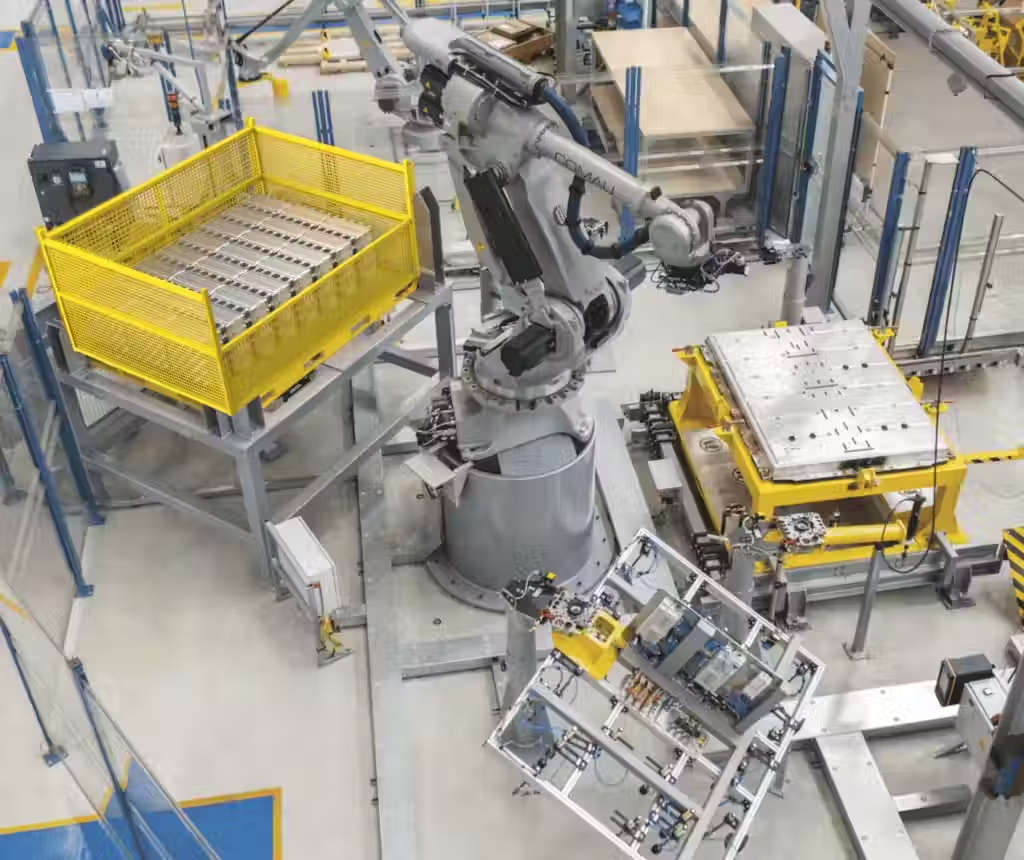
When is an EV battery worth repairing? A route decision before recycling
An accident-damaged EV battery is not automatically recycling feedstock. It may be a repair candidate, a source of reusable modules, a second-life asset or a material-recovery input. The difficult part is not naming those routes. It is making a safe, evidenced decision early enough to preserve value.
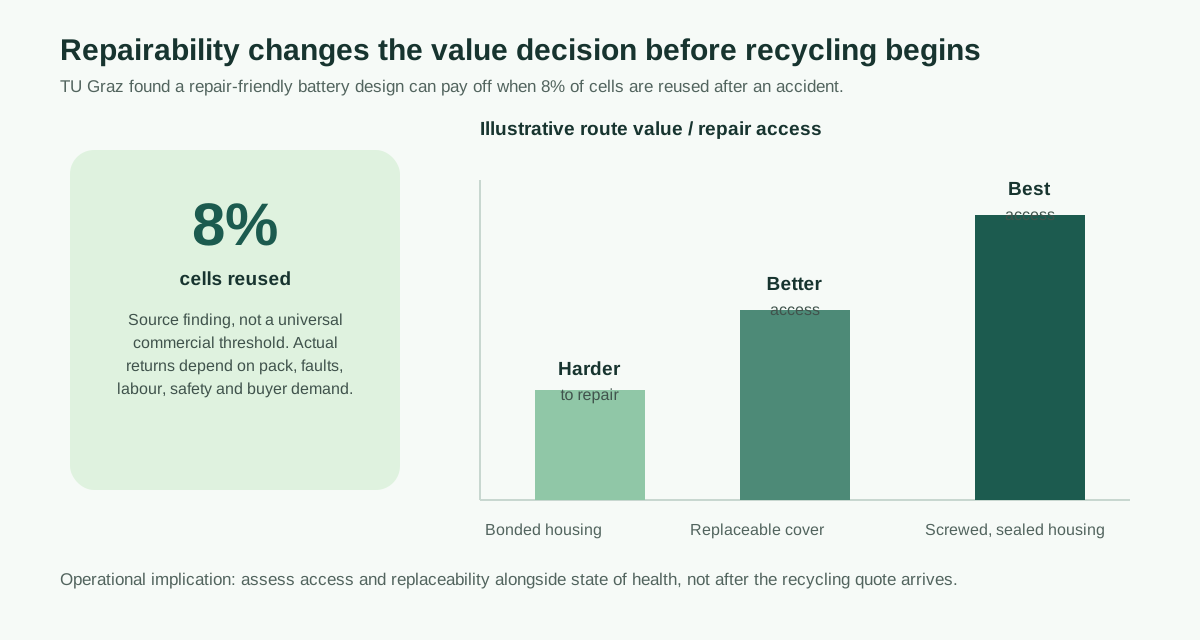
New guidance from TU Graz makes the point in practical terms: in research focused primarily on electric two-wheelers, a repair-friendly traction-battery design became economically and environmentally worthwhile if only 8% of cells were reused after an accident. The researchers say their methods and simulations can also inform larger vehicles. It is not a universal buy-or-repair threshold, but evidence that design access, diagnosis and a disciplined route decision can matter before a recycler receives the pack.
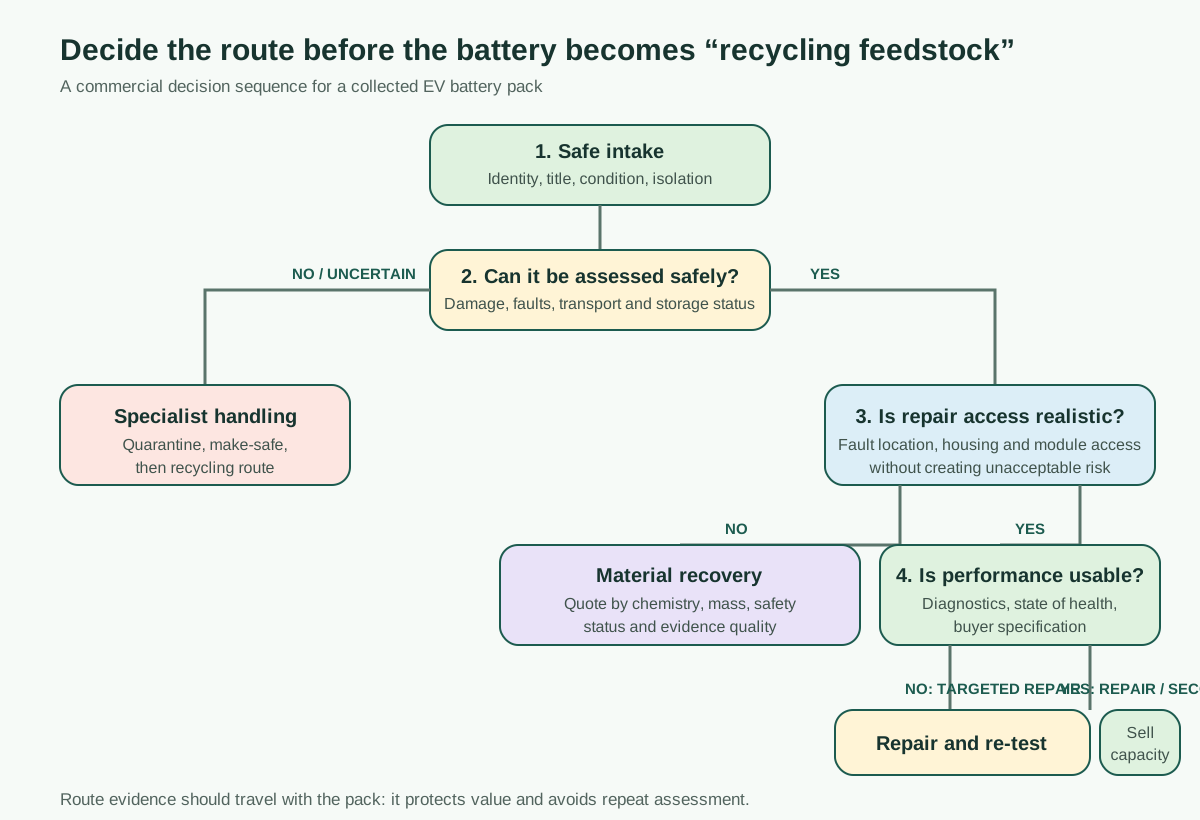
The first mistake: treating all damaged batteries alike
Damage does not answer the commercial question on its own. A pack with a repairable housing, a localised fault and a trustworthy diagnostic record has a different route from a pack with thermal-event history, uncertain provenance or unsafe isolation status.
The correct order is:
- establish identity, transfer authority and current safety status;
- decide whether the pack can be assessed safely;
- obtain diagnostics that match the intended route;
- compare repair, second-life and material-recovery value on the same evidence base;
- transfer the evidence with the battery, not separately in somebody’s inbox.
What the 8% finding does and does not say
TU Graz compared battery-pack designs with differing repair access in work focused primarily on electric two-wheelers. It found that a repair-friendly design could deliver economic and environmental benefits where just 8% of cells were reused after an accident. Cells account for about 75% of a pack’s mass and are its largest cost component. The researchers say their methods and simulation approaches can be applied to larger vehicles; the 8% result itself should be treated as a design signal, not a guaranteed threshold for every EV pack.
That does not mean every pack with 8% usable cells should be repaired. The real route depends on safety, labour, transport, warranty exposure, buyer demand and whether the individual modules can be accessed without creating more risk or cost than they save.
The evidence needed before a route decision
| Decision question | Minimum evidence | Why it changes the route |
|---|---|---|
| Can the pack be handled and tested safely? | Damage record, isolation status, thermal-event history, storage and dangerous-goods status | A pack that cannot be safely assessed needs specialist handling before commercial comparison. |
| Is repair physically realistic? | Pack architecture, housing access, fasteners or adhesives, module access, fault location | Replaceable access can turn a whole-pack write-off into targeted work. |
| Is usable capacity worth selling? | Diagnostic method and date, state of health, fault codes, voltage consistency, operating limits | A buyer needs evidence, not a broad “working” description. |
| Is second life credible? | Configuration, safety assessment, warranty position, integration requirements and buyer specification | Stationary use is a new duty cycle, not merely a place to park a depleted pack. |
| What is the recycling value? | Chemistry, verified weight, condition, contaminants, collection route and custody | Better inputs produce better quotes and reduce pricing buffers. |
A practical decision tree for sellers and operators
1. Stop and contain when safety is unresolved
Do not force an optimistic commercial route through an unresolved safety question. Quarantine, make safe and use the appropriate specialist pathway if there is visible severe damage, suspected thermal instability, water ingress, unknown isolation status or inadequate handling documentation.
A fast quote is not useful if the next holder must absorb an undisclosed fire or transport risk.
2. Test for the route you are actually considering
A voltage reading is not a repair assessment. A state-of-health figure without its method, test date and scope is not a second-life qualification. Match the diagnostic work to the intended buyer and preserve its limitations.
For repair or module reuse, that commonly means fault isolation, insulation and electrical checks, configuration information and physical access assessment. For material recovery, chemistry, pack condition, incoming weight and safety classification may matter more than a detailed performance record.
3. Price the route, not just the pack
Compare the net outcome after handling, diagnostic work, transport, repair labour, warranty risk, storage and time-to-sale. “Highest headline price” is often the wrong metric if a route has fragile evidence or a buyer cannot actually accept the pack.
| Route | Best fit | Main value driver | Evidence that protects the deal |
|---|---|---|---|
| Targeted repair | Localised fault; accessible pack; known history | Avoided full-pack replacement | Fault diagnosis, access assessment, repair scope |
| Module or cell reuse | Usable units with traceable performance | Retained functional capacity | Unit testing, configuration, provenance |
| Second-life storage | Safe pack with suitable remaining performance | Energy-service value over time | State of health, operating envelope, safety assessment |
| Material recovery | Unsafe, inaccessible or uneconomic-to-repair pack | Recoverable material and processing fit | Chemistry, mass, condition, custody and transport status |
Three commercial habits worth adopting now
Keep a route file from collection. Identity, title, condition, safety status, diagnostic record and custody should travel with the battery. It reduces repeat checks and gives every downstream counterparty a clearer basis to price risk.
Separate “could be reused” from “has a buyer-ready case”. A technical possibility becomes a tradeable route only when test evidence, safety conditions and commercial acceptance line up.
Ask recyclers for a route-aware quote. If reuse has not been assessed, say so. If it has been rejected, include why. This lets a recycler quote from a clearer risk position and prevents a recycling route from becoming the default merely because the information was missing.
The ReBattery takeaway
The most valuable decision is often made before a pack reaches a recycler. Good diagnostics and repair-friendly access can preserve options. Weak records and unclear safety status remove them.
Treat route selection as a small evidence-backed investment: it can protect repair and second-life value where that is credible, and it can make material-recovery pricing more accurate where it is not.
Sources
- TU Graz / electrive, 14 August 2026, TU Graz develops guidelines for repairable EV batteries
- Battery Lifecycle Company / Auto Recycling World, 4 August 2026, BLC puts battery value before recycling