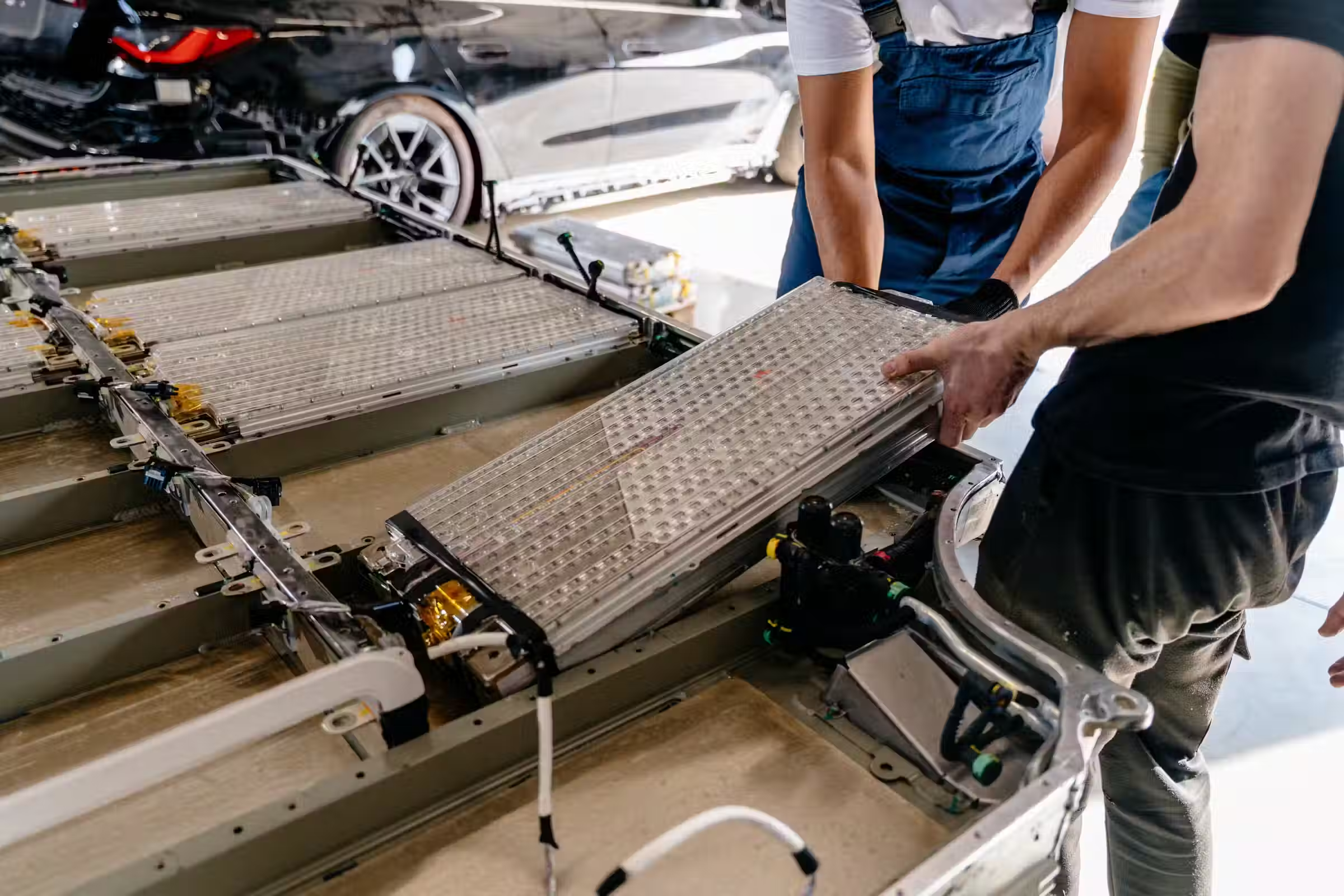
EV battery recycling in the UK: value, compliance, routes
For most organisations, "end-of-life EV batteries" is not a single problem. It's three problems at once: what the batteries are worth, who should take them, and how to stay compliant. Getting the route right matters because lithium-ion batteries can carry safety risks, regulatory obligations, and meaningful residual value. In practice, EV battery recycling in the UK sits at the intersection of safety management, regulatory obligations, and recoverable value.
This guide explains the practical routes available in the UK (recycling, reuse, resale), how EV battery recycling works, what typically drives value, and the compliance steps you need to manage along the way, including the EV battery recycling process and lithium-ion battery recycling considerations.
Should you recycle, reuse, or resell an EV battery?
Recycling is only one of several valid "best" outcomes. The right route depends on battery condition, chemistry, volume, time constraints, and your risk appetite.
- Reuse (in-vehicle): refurbishment, module replacement, or pack repair so the battery stays in automotive service.
- Repurpose (second-life): redeploying packs or modules into less demanding stationary applications, where appropriate.
- Recycle (materials recovery): recovering metals and other inputs to feed new battery production or other industries.
- Resale (as an asset): selling to a buyer who will reuse, repurpose, or recycle, shifting operational handling to a downstream specialist.
This article focuses on how to choose the right route in the UK rather than pushing a single outcome.
What makes EV batteries difficult (and valuable) to recycle?
EV packs are complex electrochemical systems with multiple subcomponents: cells, modules, pack housing, busbars, cooling systems, wiring, and electronics such as the battery management system (BMS). They also vary by chemistry (commonly NMC/NCA and increasingly LFP), design, and state of health (SoH).
That complexity drives both:
- Value from recoverable metals and potentially reusable components.
- Cost and risk from disassembly effort, transport restrictions, safety controls, and compliance burden.
How EV battery recycling works (high-level)
Most commercial recycling routes combine several stages. Exact steps vary by facility, but the workflow below is the typical logic chain. This overview describes the EV battery recycling process at a high level.
1. Intake, inspection, and safe handling
Batteries are assessed for damage, SoC, and transportability. Safe handling can include quarantine, controlled discharge, and packaging appropriate to the risk profile. This is the stage where many delays happen if the shipment lacks documentation or arrives in poor condition.
2. Dismantling and pre-processing
Depending on the route, packs may be dismantled into modules or cells, or processed more directly. Mechanical pre-processing can include shredding and separation to isolate streams such as plastics, aluminium, copper, steel, and a metal-rich intermediate often referred to as "black mass".
3. Metallurgical recovery
Recovering battery metals typically uses one or a combination of the following:
- Pyrometallurgy: high-temperature processing to recover certain metals, with trade-offs on energy use and which elements are retained.
- Hydrometallurgy: chemical leaching and precipitation or solvent extraction to recover metals with high selectivity, often used for black mass refining.
- Direct / cathode-to-cathode approaches: emerging routes that aim to preserve more of the cathode structure to reduce processing steps.
In lithium-ion battery recycling, outputs can include recovered copper/aluminium, nickel/cobalt compounds, lithium salts, and other material streams depending on chemistry and process design.
UK compliance: what you typically need to get right
EV batteries can fall under multiple UK requirements depending on who you are (producer, holder, carrier, broker) and what you are doing (storage, transport, treatment). You should always confirm your obligations for the specific battery type and scenario, but most compliant workflows include the following themes:
- Waste classification and duty of care: determining whether the battery is waste and, if it is, whether it is hazardous, then maintaining appropriate documentation and controls.
- Permitted operators: using appropriately authorised or permitted carriers and facilities for storage, treatment, and export, if relevant.
- Transport compliance: lithium batteries are subject to strict transport rules, including packaging and documentation, due to fire risk.
- Traceability: maintaining a clear audit trail from collection to final treatment, including evidence of recycling, recovery, and downstream routing where available.
In practice, "compliance" often becomes a documentation problem: organisations lose time because essential battery details, chain-of-custody records, or shipment paperwork are incomplete.
What affects the value of end-of-life EV batteries?
Two packs with the same nominal kWh rating can price very differently. The main value drivers tend to be:
- Chemistry: different chemistries imply different recoverable metals and different second-life suitability.
- State of health (SoH) and testing data: credible test data can open reuse or repurpose routes and reduce risk premiums.
- Form factor and design: how quickly a pack can be made safe, dismantled, and processed.
- Condition: damage, thermal events, swelling, or contamination can increase handling cost.
- Quantity and consistency: repeatable streams generally attract better pricing and smoother logistics.
- Location and logistics: distance, site access, and transport constraints are often material costs.
- Commercial terms: timing, liability allocation, insurance requirements, and evidence/reporting requirements.
A practical checklist: what to prepare before requesting quotes
If you want credible, comparable quotes and fewer surprises, prepare a concise "battery passport" dataset for each lot. Even a simple template helps:
- Battery type (pack/module/cell), make/model if available, and chemistry if known.
- Quantity, total weight, and approximate energy capacity.
- SoH/diagnostics and any test reports.
- Condition notes, including damage, storage history, and any incidents.
- Collection location(s), site constraints, and preferred timeline.
- Any compliance requirements you need met, such as reporting, certificates, or traceability expectations.
Choosing the "best" EV battery recycling route in the UK
Searches for "best EV battery recycling" often assume there is one universal answer. In reality, "best" depends on your objective. A useful way to choose is to score options against a small, explicit set of criteria:
- Compliance confidence: can the partner demonstrate permitted operations, safe handling, and clear auditability?
- Economic outcome: net value after logistics, testing, handling, and processing costs.
- Operational friction: lead times, ability to handle your form factor, on-site requirements, and communications cadence.
- Downstream clarity: what happens to the battery after collection, and what evidence do you receive?
- Route suitability: is this stream genuinely suited to reuse/repurpose, or is materials recycling the responsible outcome?
When you compare quotes, focus less on headline price and more on scope, assumptions, and proof: what is included, what triggers extra charges, and what documentation you'll receive at the end.
China EV battery recycling vs the UK: why it matters
In industry discussions, "China EV battery recycling" is often referenced for its scale and speed. China is a global leader by scale in EV production and battery recycling capacity, and its policy and industrial ecosystem has helped build high-throughput recycling supply chains. For UK-based holders of batteries, the relevance is indirect: China's capacity and technology development can influence global commodity pricing and available processing routes.
But your operational reality is local: you still need UK-appropriate safety, permitting, and traceability, and you need partners who can handle your specific batteries and documentation requirements.
How ReBattery helps
ReBattery supports organisations that hold end-of-life batteries and need a clear, compliant route forward. Many companies don't know what their batteries are worth, who should take them, or how to stay compliant. ReBattery is designed to solve all three. If you're searching for "EV battery recycling UK" options, a neutral platform can streamline discovery and compliance.
- Price / value: sync your inventory and get an instant valuation to understand the likely value range and routing options.
- Find verified options: get quotes from verified recyclers and buyers across Europe, and compare routes (recycling, reuse, resale) on consistent terms.
- Manage compliance traceability: manage the transaction with end-to-end compliance support and documentation for traceability.
If you prefer to self-serve discovery, you can also browse the recycler directory at rebattery.io/recyclers.
Conclusion
EV battery recycling in the UK is not just a sustainability topic. It's an operational decision that affects value recovery, risk, and compliance. The best outcomes come from treating batteries as managed assets: collect the right data, compare routes, and insist on traceability from collection through final treatment. With the right preparation and partners, organisations can reduce risk and unlock value while supporting a more circular battery supply chain.
Q&A
Question: How do I choose between recycling, reuse, repurpose, and resale for an EV battery in the UK?
Short answer: Start with the battery's condition, chemistry, state of health (SoH), volume, timelines, and your risk appetite. Then score your options against five criteria: compliance confidence, economic outcome net of logistics, testing, and handling, operational friction, downstream clarity, and route suitability. Recycling isn't always "best": in-vehicle repair or second-life repurpose can be optimal for healthy packs, while resale can shift operational handling and liability to a specialist buyer.
Question: What does the EV battery recycling process look like in practice?
Short answer: Most commercial routes follow three stages.
- Intake, inspection, and safe handling: assess damage and SoC, apply quarantine or controlled discharge, and package to the risk profile. Delays often stem from poor documentation or shipment condition.
- Dismantling and pre-processing: dismantle to modules/cells or mechanically shred and separate to recover plastics, aluminium, copper, steel, and a metal-rich "black mass".
- Metallurgical recovery: pyrometallurgy, hydrometallurgy, or emerging direct/cathode-to-cathode approaches recover metals. Outputs can include copper/aluminium, nickel/cobalt compounds, and lithium salts, depending on chemistry and process design.
Question: What UK compliance elements do I need to get right?
Short answer: Four themes recur across compliant workflows:
- Waste classification and duty of care: is it waste and/or hazardous, with appropriate controls and records?
- Permitted operators: authorised carriers, storage, treatment, and export where relevant.
- Transport compliance: strict packaging and documentation due to fire risk for lithium batteries.
- Traceability: a clear audit trail from collection to final treatment with evidence where available.
In practice, compliance issues often come down to missing data: incomplete battery details, chain-of-custody gaps, or shipment paperwork errors.
Question: What determines the value of end-of-life EV batteries?
Short answer: Pricing varies widely, even for packs with the same kWh rating, based on:
- Chemistry, including recoverable metals and second-life suitability.
- SoH/testing data, where credible diagnostics open reuse/repurpose routes and reduce risk premiums.
- Form factor/design, including ease of making safe, dismantling, and processing.
- Condition, including damage, thermal events, swelling, or contamination.
- Quantity/consistency, where repeatable streams attract better pricing and smoother logistics.
- Location/logistics, including distance, site access, and transport constraints.
- Commercial terms, including timing, liability allocation, insurance, and reporting requirements.
Question: What should I prepare before requesting quotes for EV battery recycling or resale?
Short answer: Create a concise "battery passport" for each lot to get credible, comparable quotes:
- Battery type (pack/module/cell), make/model if available, and chemistry if known.
- Quantity, total weight, and approximate energy capacity.
- SoH/diagnostics and any test reports.
- Condition notes, including damage, storage history, and incidents.
- Collection location(s), site constraints, and preferred timeline.
- Any compliance requirements, including reporting, certificates, and traceability expectations.